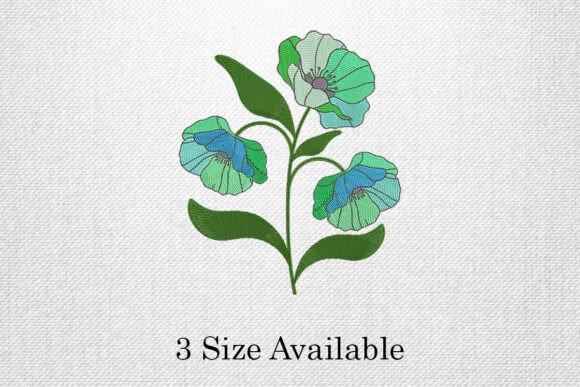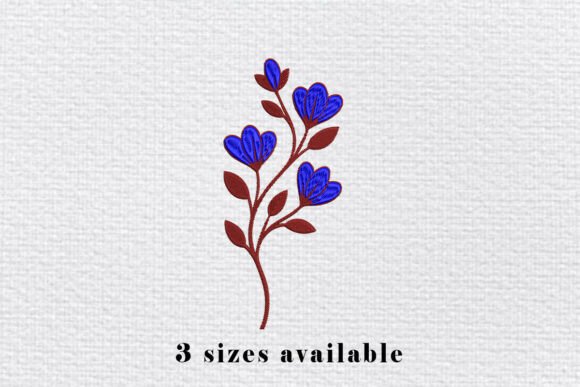
Blue Floral Branch Embroidery File
A Timeless Floral Touch—But Does It Work for Your Brand?
As an embroidery designer who’s developed and tested hundreds of digital embroidery files for small businesses—from neighborhood bakeries to indie florists—I approached the Blue Floral Branch Embroidery File with a practical eye: not just “Is it pretty?” but “Will it elevate my client’s brand, hold up in production, and resonate with real customers?” The title alone sets expectations: blue suggests calm, trust, and approachability; floral branch implies organic flow, gentle movement, and artisanal charm—not stiff symmetry or over-engineered detail. That’s promising for brands that want warmth without whimsy, elegance without formality.
Real-World Performance Across Small Business Merch
This machine embroidery design shines where subtlety and storytelling matter. On staff aprons for a boutique coffee shop? Yes—it adds quiet sophistication without competing with name tags or menu boards. As an embroidered patch on tote bags for a local florist? Absolutely. Its branching structure gives natural visual rhythm, scaling gracefully from 2.5” to 4” without losing legibility. For cap embroidery on front panels, it works best when placed slightly above center—not too high (where curvature distorts the curve of the branch) and not too low (where it risks blending into the visor seam).
In custom apparel for handmade product lines—think linen shirts for a ceramic studio or cotton tees for a pet wellness brand—the Blue Floral Branch Embroidery File functions as a signature accent: tasteful, non-intrusive, and quietly confident. It performs well on medium-weight fabrics like twill, canvas, and midweight denim. As an apron embroidery motif, it balances utility and beauty—small enough to avoid bulk at the chest pocket, yet detailed enough to feel intentional and crafted.
For boutique merchandise and Etsy branding, this design supports a cohesive visual language. Paired with minimalist typography or soft watercolor labels, it reinforces a handmade product aesthetic without veering into cliché. And because it belongs to the Single Flowers category—not a dense bouquet or abstract bloom—it avoids visual clutter on smaller items like product packaging accents or gift tag embroidery.
Where Caution Is Essential
Like any embroidery file, the Blue Floral Branch Embroidery File has boundaries. Avoid using it below 1.75” in height for embroidered patches—delicate stem lines and petal edges may collapse or blur, especially on textured fabric like terry cloth or heavy canvas. Cap fronts with deep curvature require careful digitizing adjustments; if the original file wasn’t optimized for curved surfaces, test stitch on a cap blank first.
High stitch density isn’t explicitly stated in the description—but floral designs with layered petals often carry moderate-to-heavy density. That means stabilizer choice is non-negotiable: use cutaway for knits, medium-weight tear-away for stable wovens, and avoid lightweight fusibles unless you’ve verified thread coverage holds. Also, dark uniforms demand strong thread color contrast: navy blue thread on black fabric will disappear; opt for crisp white, light gray, or pale teal instead—and always test in black and white first to assess tonal balance.
How It Shapes Brand Identity and Customer Trust
Small business merch isn’t just decoration—it’s silent communication. A well-executed embroidered patch tells customers, “We pay attention to detail.” The Blue Floral Branch Embroidery File supports that message when used intentionally. Its organic line work conveys care and craft; its restrained palette (implied by “blue”) signals reliability and calm—ideal for wellness studios, baby boutiques, or eco-conscious brands. Unlike flashy graphics or trendy fonts, this digital embroidery file ages gracefully, supporting long-term brand consistency across seasons and product lines.
Customer engagement rises when merch feels personal, not generic. This design avoids mass-market sterility—it reads as thoughtfully selected, not algorithmically generated. When stitched onto customer gifts (like branded tote bags for first-time buyers), it enhances perceived value. And for Etsy sellers, pairing it with a printable mockup helps buyers visualize how it’ll look *on their own products*, reducing returns and boosting confidence in your commercial embroidery offerings.
Practical Designer Notes Before You Stitch
- Test in black and white first—to confirm contrast, spacing, and negative space clarity before committing to thread colors.
- Check minimum viable size—stitch a 1.75” version on scrap fabric matching your end-use material (e.g., duck canvas for totes, twill for caps).
- Review thread color pairings—especially for small business merch where brand colors must align. Does “blue” mean cobalt, slate, or powder? Confirm with the seller.
- Inspect spacing between stems and blooms—tight loops or overlapping elements can cause thread nesting or skipped stitches on older machines.
- Confirm hoop size compatibility—if your workflow relies on 4x4 hoops, verify the design fits without re-hooping mid-stitch.
- Use proper stabilizer for fabric texture—a loose-weave linen needs different support than smooth poplin.
- Create a physical mockup before client approval—a photo of the actual embroidered patch on a tote or cap builds trust faster than a digital preview.
- Compare beside other design assets—does it harmonize with your logo, website palette, and packaging? Consistency strengthens brand identity.
- Verify commercial licensing—since this is intended for small business merch, ensure the embroidery file permits resale of finished products. If unclear, contact the seller before bulk production.
Final Thought: Elegant Simplicity, Built for Business
The Blue Floral Branch Embroidery File isn’t a flashy statement—it’s a thoughtful accent. For small business owners, apparel decorators, and crafters building recognizable, trustworthy brands, it delivers quiet professionalism with botanical charm. Used with intention—in apron embroidery, cap embroidery, tote bag design, or as a refined patch—it becomes more than decoration. It becomes part of your story. Just remember: every great commercial embroidery project starts not with the machine, but with smart review, real testing, and respect for how design lives in the hands of your customers.