Carrot Embroidery Design
A Playful, Grounded Touch for Spring-Minded Makers
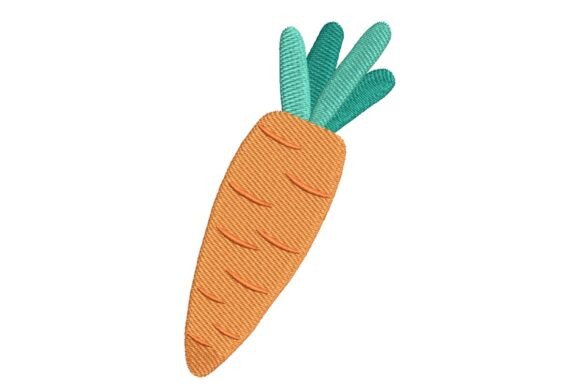
As someone who’s stitched hundreds of designs across apparel, home goods, and boutique gifts, the Carrot Embroidery Design landed on my desk just as I was prepping a batch of spring-themed tote bags for a local farmers’ market pop-up. My first impression? It’s cheerful without being cutesy—rooted (pun intended) in clean shape language and balanced negative space. The silhouette reads instantly as carrot, but with subtle personality: a tapered tip, gentle curve, and stylized leaf cluster that avoids cartoon overload. It doesn’t scream “Easter”—it whispers “fresh,” “handmade,” and “thoughtfully made.” That nuance matters when you’re building a cohesive line of small shop products or curating digital embroidery files for discerning Etsy buyers.
Where This Design Truly Shines
The Carrot Embroidery Design excels where clarity, charm, and commercial practicality intersect. On a medium-weight cotton tote bag? Crisp and friendly—ideal for a boutique’s seasonal collection. On a soft organic cotton baby onesie? Its moderate scale and open layout avoid bulk, keeping stitching lightweight and skin-safe. As an embroidered patch sewn onto a denim apron or canvas cap? It holds up beautifully—no tiny fragile details to snag or distort. I also tested it on a linen tea towel: the design’s confident outlines and thoughtful fill stitch distribution kept texture visible without muddying the motif. For craft business owners, that means fewer customer questions about “will this look good on *my* fabric?” and more repeat orders for coordinated holiday embroidery sets.
Real-World Fit: From Sweatshirt to Nursery Decor
- Custom apparel: Works cleanly on crewneck sweatshirts and relaxed-fit tees—especially when placed off-center or along a hemline for modern appeal.
- Baby embroidery: Gentle curves and no fine interior lines make it ideal for onesies, burp cloths, and crib mobiles—parents appreciate simplicity that reads well at a glance.
- Holiday embroidery: While rooted in spring energy, it avoids overt Easter symbols (bunnies, eggs, pastel overload), giving it longer shelf life than trend-dependent motifs.
- Small shop product: Stitches quickly, uses modest thread, and translates well into printable mockups—key for Etsy sellers needing clean, trustworthy visuals.
- Digital embroidery file: Its visual confidence makes it a strong anchor design in a themed bundle—think “Veggie Patch” or “Farmhouse Kitchen” collections.
Where to Pause—and Stitch With Intention
This isn’t a one-size-fits-all machine embroidery design. Its strengths come with quiet caveats. On highly textured fabrics like bouclé or thick terry cloth, the leaf cluster can blur—consider simplifying or using a lighter stabilizer. On stretchy knits (think lightweight jersey tees), test hoop tension and stabilizer pairing carefully: too much pull distorts the carrot’s natural taper. Dark fabrics demand attention to thread color contrast—avoid pale orange fills unless you’re layering underlay or using high-sheen rayon. And while it’s not overly dense, avoid cramming it into a 3” hoop without verifying stitch density; tight corners in the leaf base may compress if scaled down aggressively.
What It Adds to Your Finished Product—Beyond the Thread
A well-executed Carrot Embroidery Design quietly elevates perceived value. It signals intention—not just decoration. Customers notice the balance between shape and breathing room, the absence of overworked detail, and the way it complements (not competes with) the garment or item beneath. For handmade product sellers, that builds trust: it says you understand proportion, fabric behavior, and what makes something feel *designed*, not just digitized. On personalized gifts—like a custom embroidered kitchen towel for a new gardener—it adds warmth and specificity without leaning on cliché. And for digital embroidery file buyers, its versatility across categories (baby, home, apparel) increases resale potential and bundle cohesion.
Practical Designer Notes Before You Stitch
- Always run a test on scrap fabric matching your final project’s weight and stretch—even if it’s “just a carrot.”
- Check thread color contrast on both light and dark backgrounds before committing to a full run.
- Review stitch density visually: look for areas where fill stitches might crowd delicate curves or overlap running stitch outlines.
- Confirm hoop size compatibility—especially if planning layered projects (e.g., carrot + coordinating “Garden Fresh” text).
- Inspect small details at actual stitch-out size: the leaf tips should land crisply, not fray or vanish.
- Test in black-and-white mockups: does the shape hold up without color crutches?
- Use appropriate stabilizer—cutaway for knits, tear-away for stable wovens, and lightweight fusible for delicate items like baby caps.
- Verify licensing terms before selling finished embroidered items or bundling the Carrot Embroidery Design into digital product suites.
Final Thought: A Design That Grows With You
The Carrot Embroidery Design isn’t flashy—but it’s reliable, adaptable, and quietly sophisticated. It fits naturally into a craft business’s rhythm: fast enough for volume, distinctive enough for branding, and thoughtful enough to earn a second look from customers who care about how things are made. Whether you’re stitching a single personalized gift or scaling up for wholesale nursery decor, it delivers consistent charm without demanding perfection. In a landscape crowded with over-digitized, over-complicated motifs, this one feels like coming home to good soil—and that’s rare.