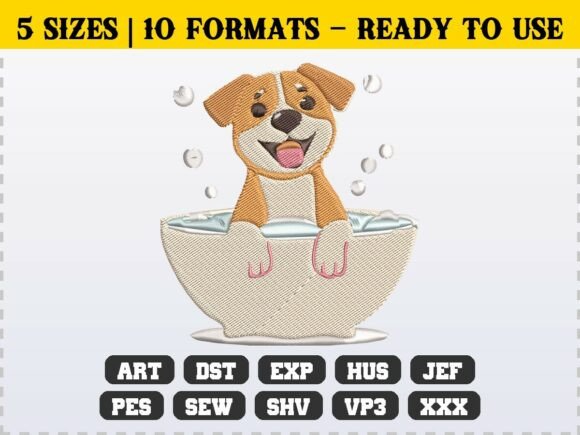
Cute Puppy in Tub Funny Embroidery
First Impression: Playful, Warm, and Instantly Relatable
As an embroidery designer who’s curated over 200 craft fair booths—and watched thousands of shoppers pause at a single stitch—I’ll say it straight: Cute Puppy in Tub Funny Embroidery lands with cheerful, unforced charm. It’s not elegant or minimalist. It’s not rustic or vintage either. It’s playfully modern—a lighthearted, expressive machine embroidery design that reads as friendly, handmade, and full of personality. That “joyful expression” mentioned in the description? That’s the hook. In a sea of florals and monograms at a weekend market, this design makes people smile—and that’s where sales begin.
Where It Shines: Craft Fair Products That Sell
This embroidery file thrives on products where whimsy meets utility. On a natural canvas tote bag? Perfect—it anchors the front with warmth and humor without overwhelming. As an apron embroidery? Ideal for pet lovers, bakers, and small-batch makers who want to signal approachability and joy. For tea towel embroidery, it works best centered on a light linen or cotton towel—bubbles and puppy ears read clearly against clean fabric, turning everyday kitchen tools into giftable handmade products.
As an embroidered patch? Strong contender. Small shop owners can sew it onto denim jackets, backpacks, or even dog bandanas (yes—double-dog duty). On caps? Use caution—curved surfaces compress detail, so test stitch density first. But on flat-front trucker caps or structured beanies? Absolutely charming. For fabric pouches and pillow covers, size it mid-scale (3–4 inches wide) to keep proportion balanced and avoid visual clutter.
What Buyers Notice—And Why It Converts
At a craft fair, attention spans are short and tactile curiosity is high. Cute Puppy in Tub Funny Embroidery wins because it’s instantly legible. No decoding needed. Even from six feet away, shoppers recognize the tub, the bubbles, the puppy’s grin. That clarity translates directly to booth traffic—and to Etsy seller listings, where thumbnail recognition drives clicks. Pair it with a clean printable mockup showing the design on a cream tea towel and a navy tote, and you’ve got scroll-stopping design assets.
It also elevates perceived value. A plain cotton pouch becomes a small shop product with story and soul. An otherwise simple apron transforms into a conversation starter (“Oh my gosh—is that your dog?”). That emotional resonance builds brand consistency across your handmade product line, especially if you lean into the Dogs category with coordinated designs later.
Production Reality Check: What Works—and What Needs Testing
This isn’t a “stitch-and-go” file. Its charm lives in expressive details—the puppy’s eyes, the curve of the tub, the texture suggestion in the bubbles. That means stitch density matters. On textured towels or thick canvas, dense fill areas may flatten or pucker without proper stabilizer. Always test the embroidery file on scrap fabric matching your final product’s weight and weave.
Small lettering isn’t present here—which is a win—but tiny features (like bubble highlights or ear contours) may blur on dark fabric or at sub-3-inch sizes. If you’re scaling down for patches or keychain tags, verify readability in person—not just on screen. And never assume hoop size compatibility; confirm the design fits your standard hoops before batching.
Thread colors should pop but stay cohesive. A soft blue tub + creamy bubbles + warm brown puppy fur reads sweet and polished. Avoid high-contrast combos (e.g., neon green bubbles on black fabric) unless that’s your intentional brand voice—otherwise, it risks looking chaotic instead of cute.
Smart Selling Moves for Creative Entrepreneurs
For Etsy sellers and digital embroidery file shops: position Cute Puppy in Tub Funny Embroidery alongside seasonal bundles (“Spring Pet Lovers Pack”) or cross-category pairings (“Bath Time & Biscuits Set”). It’s versatile enough to support both commercial embroidery and home-crafter use—but always double-check licensing terms before selling finished products.
At your booth, don’t just display stitched samples—show process. Hang a framed scrap swatch beside your best tote bag, labeled “Test Stitch • Same File • Different Fabric.” Shoppers love seeing craftsmanship transparency. And include one real mockup in your booth signage: a photo of the design on a folded tea towel next to a bar of lavender soap. That’s not decoration—that’s context.
Essential Designer Notes Before You Stitch
- Test the machine embroidery design on scrap fabric matching your final product’s weight, stretch, and texture.
- Check thread contrast on both light and dark fabrics—especially around fine bubble details.
- Review spacing between elements: ensure the tub, puppy, and bubbles breathe, not crowd.
- Confirm hoop size compatibility—don’t assume it fits your standard 5x7 or 6x10.
- Inspect stitch density in fill areas—adjust underlay or reduce density if embroidering on terry cloth or heavy canvas.
- Use cutaway or medium-weight tear-away stabilizer for structured items (totes, aprons); consider topping for textured towels.
- Create at least one real-world mockup—not just digital—to assess scale, balance, and charm in natural light.
- Compare how the design reads on multiple fabric colors: oat, navy, sage, and cream tell different stories.
- Verify commercial licensing status before selling finished products—this is non-negotiable for small business owners.
Final Thought: A Design That Sells Because It Feels Human
Cute Puppy in Tub Funny Embroidery doesn’t chase trends—it leans into timeless affection. It’s the kind of machine embroidery design that makes someone stop, point, and say, “I need that for my dog-loving friend.” That’s gold at a craft fair. That’s repeat traffic on Etsy. That’s why, after 12 years of designing for handmade markets, I still reach for joyful, character-driven files like this one—not because they’re easy, but because they connect. Just remember: every stitch tells a story. Make sure yours is clear, confident, and full of heart.