Glass of Red Wine Embroidery Design
First Impressions: Elegant Simplicity, Not Just Another Glass
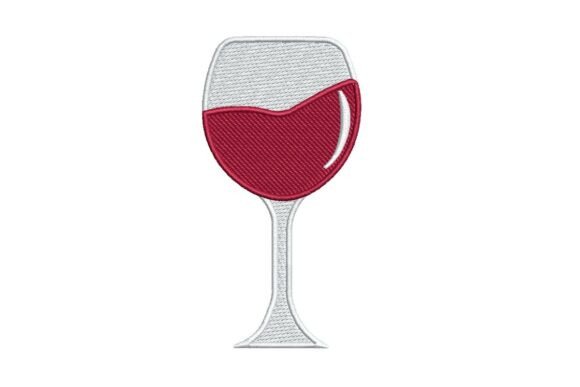
When I opened the Glass of Red Wine Embroidery Design, what struck me wasn’t flash—it was quiet confidence. The stemmed glass sits centered on a clean white background, rendered in crisp white thread with a subtle textured fill inside the bowl. No grapes, no vines, no corkscrew doodles—just one poised, half-filled wine glass. It reads as mature, refined, and instantly recognizable. This isn’t a novelty design for birthday parties; it’s a visual shorthand for celebration, pause, and presence. For embroidery designers and craft business owners, that kind of clarity is gold—it translates effortlessly into branding, gifting, and boutique merchandise.
A Real Project Test: Embroidering a Linen Tea Towel for a Local Vineyard Pop-Up
Last month, I used the Glass of Red Wine Embroidery Design on a set of heavyweight linen tea towels for a small vineyard’s holiday shop. We stitched it at 3.8" wide on the lower corner—just large enough to read, small enough to feel intentional. The white-on-linen effect was understated but unmistakable: soft texture against precise satin-stitched curves, the fill pattern adding gentle dimension without overwhelming the fabric. Customers paused, smiled, and asked, “Is this hand-drawn?” That’s the mark of a well-balanced machine embroidery design—it feels handmade, not digitized.
Where It Shines (and Where It Needs Care)
The Glass of Red Wine Embroidery Design works beautifully on stable, medium-weight fabrics: cotton twill aprons, canvas tote bags, structured sweatshirt pockets, and woven pillow covers. Its clean lines hold up well on custom apparel—even on slightly curved surfaces like the front of a dad cap, as long as you use light cutaway stabilizer and avoid stretching the hoop.
That said, tread carefully with stretchy knits or ultra-thin fabrics like baby onesies. The stem detail is delicate—not micro-fine, but narrow enough that loose tension or shifting fabric can blur its definition. On dark fabric? You’ll need to verify contrast: white thread may read softly unless you add a shadow underlay or switch to ecru or light gray. And while the design avoids dense fill areas, always check stitch density before scaling up—if you enlarge it beyond 4.5", the textured fill could become too heavy for lightweight tea towels or nursery decor.
Smart Pairings for Your Craft Business
- Tote bag design: Centered on natural canvas, it signals sophistication—not just “wine lover,” but someone who values intention and craft.
- Sweatshirt embroidery: Perfect for the left chest of unisex crewnecks—small enough to avoid bulk, distinctive enough to spark conversation.
- Personalized gift: Pair with monogrammed initials below the glass for wedding or anniversary kitchen towels. Feels heirloom-ready, not mass-produced.
- Embroidered patch: Works cleanly as a sew-on or iron-on when digitized with clean jump stitches and minimal underlay.
- Holiday embroidery: Looks especially warm on cream-colored flannel blankets or velvet pillow covers—no red thread needed to evoke the season.
What It Adds to Your Finished Product (Beyond Aesthetics)
This isn’t just about looks—it’s about perceived value. A well-executed Glass of Red Wine Embroidery Design elevates a plain tea towel from utilitarian to giftable. It tells your Etsy buyer or local boutique customer: *This was chosen, not slapped on.* That builds trust. For small shop owners, consistency matters—use it across matching aprons, coasters, and napkins, and it becomes a quiet signature. For digital product sellers, it’s strong as a standalone embroidery file or part of a curated “Hostess Collection” bundle. And because it avoids cliché, it holds up across seasons and trends—no need to retire it after summer.
Practical Designer Notes Before You Stitch
- Always test the Glass of Red Wine Embroidery Design on scrap fabric first—especially if using textured or loosely woven material.
- Check thread color contrast on both light and dark backgrounds. White thread reads differently on oatmeal linen vs. bright white cotton.
- Review stitch density in your embroidery software—look for smooth transitions between satin-stitched stem and fill-stitched bowl.
- Confirm hoop size compatibility. While it fits standard 4x4 hoops comfortably, double-check if you plan to resize for larger projects.
- Inspect small details at 200% zoom: the curve of the bowl rim, the taper of the stem, and how the fill pattern terminates near the base.
- Test it in black-and-white mockups—this reveals clarity issues hidden by color.
- Use appropriate stabilizer: tear-away for stable wovens, light cutaway for knits or layered garments.
- Verify licensing terms before selling finished items or bundling the embroidery file commercially—some versions allow personal use only.
Final Thought: A Design That Serves the Maker—and the Customer
The Glass of Red Wine Embroidery Design doesn’t shout. It invites. It works quietly in the background of your handmade product, lifting the whole piece without demanding attention. That’s rare. For embroidery designers building a library of reliable, sellable assets—and for craft business owners curating thoughtful, cohesive collections—it’s not just another wine motif. It’s a design that earns its place, stitch by careful stitch.