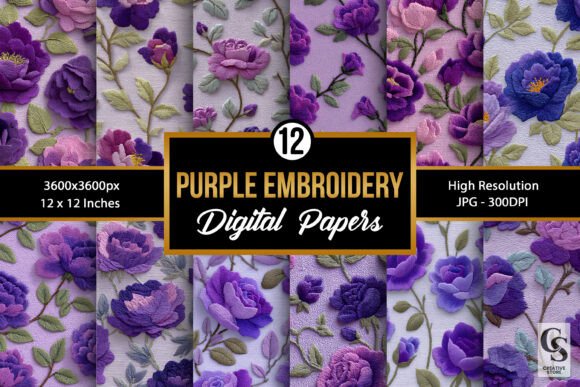
Purple Flowers Embroidery Digital Paper
A Designer’s First Glance: Soft, Timeless, and Ready for Real Stitching
Opening the zip file for Purple Flowers Embroidery Digital Paper, I immediately notice what sets it apart from trend-chasing clipart: quiet intention. These aren’t loud, saturated florals meant for Instagram thumbnails—they’re delicate, layered, and grounded in botanical rhythm. Twelve high-resolution 300dpi JPGs, each 3600 x 3600 pixels (12″ x 12″), offer breathing room—not just for printing, but for thoughtful embroidery translation. As a designer who’s stitched hundreds of custom totes, baby blankets, and boutique aprons, I read floral patterns like handwriting: this one speaks of spring mornings, not summer festivals. It leans into subtlety—soft petal edges, gentle stem curves, and intentional negative space—making it ideal for projects where elegance matters more than impact.
Where It Shines: From Nursery Decor to Boutique Merchandise
I recently used one of these papers as the foundation for a custom embroidered linen pillow cover for a local nursery boutique—and it worked beautifully. The design scaled down cleanly to a 4.5″ hoop without losing grace, and the balanced composition meant no awkward cropping on curved pillow corners. That same paper translated flawlessly onto a lightweight cotton sweatshirt for a small-batch holiday collection: the purple tones stayed rich against heather grey fabric, and the open layout prevented stitch buildup that can stiffen knitwear. For Etsy sellers, this is gold: Purple Flowers Embroidery Digital Paper reads as handmade, not mass-produced. Customers respond to its quiet confidence—especially on personalized gifts like baby onesies, tea towels for wedding favors, or embroidered patches for craft fair pins. It also holds up well in printable mockups, giving your digital listings a cohesive, professional look across product photos and social previews.
Real-World Considerations: When to Pause and Plan
That said, this isn’t a “drop-in-and-stitch” pattern for every surface. On highly textured fabrics—like bouclé knits or thick terry cloth—the fine stem details can blur unless you add light tear-away stabilizer underneath. And while the design avoids micro-detailing (no tiny lettering or fragile filigree), it does rely on smooth satin stitch flow for petals—so stretchy fabrics like jersey require careful hooping and cutaway backing to prevent puckering. I wouldn’t recommend using it full-size on curved cap fronts without testing first; the 12″ square format means scaling down significantly, and tight curves can distort petal symmetry. Also, on dark fabric, check thread color contrast early: some lavender tones fade visually if paired with low-saturation threads. Always run a test stitch on scrap fabric matching your final garment’s weight and drape.
Design Integrity in Action
What makes Purple Flowers Embroidery Digital Paper hold up across so many use cases is its visual hierarchy. Larger blooms anchor the composition, while smaller buds and trailing stems create movement—not clutter. That translates directly to stitching clarity: fill stitches land cleanly, running stitches guide the eye without competing, and satin areas stay legible even at moderate densities. For small shop owners, that consistency builds brand trust. A customer ordering a monogrammed kitchen towel with this design knows they’ll receive something refined, not pixelated or overworked. It also supports commercial embroidery work well—when converted properly into an embroidery file, the clean lines and balanced spacing reduce digitizing time and thread breaks.
Practical Notes Every Embroiderer Should Keep Handy
- Always test before committing: Stitch one motif on fabric identical to your final project—even if it’s just a corner scrap.
- Check thread color harmony: Purple can shift dramatically under different lighting. View your thread selection next to the digital paper on both light and dark backgrounds.
- Review stitch density in your embroidery software: If converting to an applique design or machine embroidery design, ensure fill areas aren’t overly dense for lightweight fabrics.
- Confirm hoop size compatibility: While the JPGs are large, your actual stitched version may need to fit within common hoop limits (e.g., 4″ x 4″ or 5″ x 7″). Scale thoughtfully.
- Inspect small details at 100% zoom: Look for any unintended gaps or thin lines that might vanish when stitched.
- Try black-and-white mockups: This reveals value contrast—critical for readability on apparel and patches.
- Verify licensing terms: Since Purple Flowers Embroidery Digital Paper is categorized as Graphics and Patterns, confirm whether your intended use (e.g., selling finished embroidered items or reselling digital assets) aligns with the license before launching.
Final Thought: A Quiet Asset for Meaningful Making
This isn’t flashy. It won’t dominate a craft fair table with neon energy—but it will earn repeat orders from customers who value craftsmanship over chaos. As a designer, I reach for Purple Flowers Embroidery Digital Paper when I want my embroidery project to feel considered, calm, and quietly luxurious. Whether it becomes part of a hand-stitched baby quilt, a limited-run tote bag line, or elegant holiday embroidery for a boutique client, it carries weight without shouting. For Etsy sellers building a signature aesthetic, for small shop owners curating cohesive collections, and for crafters who believe handmade products deserve thoughtful foundations—this set delivers substance, not just surface. It reminds us that sometimes, the most powerful design choices are the ones that leave room for the maker’s voice—and the wearer’s quiet joy.