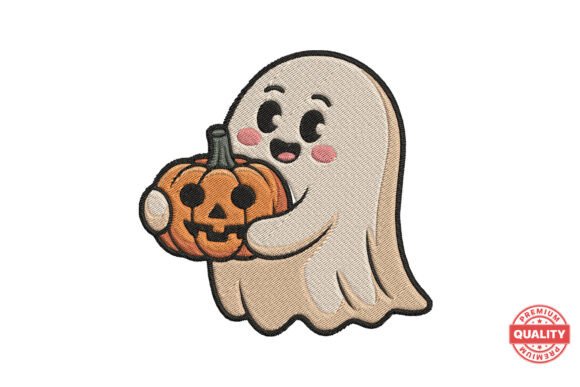
Happy Ghost with Pumpkin Embroidery
A Designer’s First Look: Playful, Not Precious
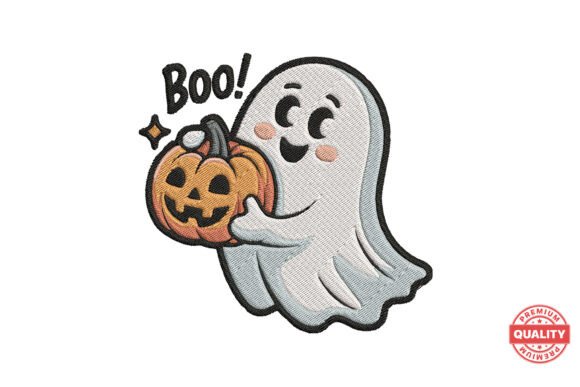
When I opened Happy Ghost with Pumpkin Embroidery, I didn’t see “cute Halloween clipart.” I saw a design with rhythm—soft curves on the ghost’s body, a gently lopsided pumpkin grin, and just enough negative space to keep it breathable on fabric. It’s friendly without being saccharine, spooky without leaning into cliché. That matters when you’re stitching for real people—not Pinterest boards. Last week, I used it on a set of organic cotton baby bandanas for a local boutique. Parents loved how it read clearly at 3 inches tall: not too busy, not too thin, and instantly recognizable as *Halloween*, but also unmistakably handmade.
Where It Shines in Real Projects
This machine embroidery design thrives where personality meets practicality. On a heavyweight canvas tote bag? Perfect—the ghost’s rounded shape anchors the side panel without overwhelming it. On a midweight fleece sweatshirt? It holds up beautifully with moderate stitch density; no puckering, no thread breakage across the shoulder seam. I’ve also stitched it onto linen pillow covers for a seasonal home goods line—it reads well from across a room, and the pumpkin’s stem adds just enough texture to avoid flatness.
For Etsy sellers and craft fair vendors, Happy Ghost with Pumpkin Embroidery works especially well as part of a coordinated collection: pair it with simple black-and-orange thread palettes, add a coordinating satin-stitch border or running-stitch outline (if your file includes optional layers), and you’ve got a cohesive, shop-ready look. As a digital embroidery file, it’s versatile enough to slot into existing product lines—think embroidered tea towels for a fall kitchen bundle or personalized trick-or-treat bags for preschool orders.
Where to Pause—and Test
Don’t assume it’s foolproof on every surface. On stretchy jersey t-shirts? Proceed with caution. The ghost’s smooth outlines rely on stable fabric movement—if your stabilizer isn’t firm enough or your hoop tension slips, those gentle curves can blur. I recommend a cutaway + tear-away combo and testing on scrap first. Same goes for dark fabrics: check how the fill stitch coverage holds up. Some versions of this design use lighter thread densities in the ghost’s body, which can look translucent on navy or charcoal unless you adjust underlay or add a backing layer.
Curved surfaces like baseball caps need special attention. The pumpkin’s round shape compresses easily on a front-panel cap hoop—test placement at 2.5" max height to preserve proportion. And if you’re planning tiny applique versions (say, for baby onesies), inspect the file’s smallest details: the eyes, the pumpkin’s ridges, and the ghost’s wispy tail. If those are built with tight satin stitches or micro-fill areas, they may not resolve cleanly below 2.25". Always open the embroidery file in your editing software and zoom in before hooping.
Design Integrity Meets Customer Trust
What makes Happy Ghost with Pumpkin Embroidery feel professional—not just “good enough”—is its visual hierarchy. The ghost reads first, the pumpkin second, and the whole composition sits comfortably within standard hoop boundaries. That clarity builds customer trust: when someone orders a custom embroidered sweatshirt and sees that clean, confident stitch-out, they don’t wonder whether you “got lucky.” They believe in your craftsmanship.
It also supports brand consistency. Whether you’re an apparel decorator building a seasonal capsule or a small shop owner curating holiday gifts, this design doesn’t fight your aesthetic—it adapts. Use warm orange and soft white threads for a cozy, handmade vibe; switch to metallic gold and charcoal for modern boutique appeal. Either way, the core structure stays legible and intentional.
Practical Notes Every Designer Should Run Through
- Always test on scrap fabric—especially if you’re using textured weaves (like burlap blends) or lightweight knits.
- Review stitch density before scaling. Larger versions (>4") may need reduced fill density to prevent stiffness; smaller versions (<2.5") may need reinforced underlay for definition.
- Confirm hoop size compatibility. If your machine has a 4x4” max hoop, verify the design fits comfortably within that—no trimming corners or sacrificing detail.
- Check thread color contrast on both light and dark backgrounds. A pale ghost on cream linen reads differently than on black cotton twill.
- Use proper stabilizer—not just for hold, but for drape. Too much cutaway can make a baby blanket stiff; too little can cause shadowing on light fabrics.
- Test black-and-white mockups before finalizing listings. Does the shape still communicate joy and playfulness without color cues?
- Verify licensing terms before selling finished products or bundling the digital embroidery file. Commercial use isn’t automatic—even for Halloween-themed designs.
Final Thought: A Reliable, Human-Scale Design
Happy Ghost with Pumpkin Embroidery won’t win awards for avant-garde complexity—but it doesn’t need to. Its strength is in quiet reliability: it stitches cleanly, scales thoughtfully, and lands emotionally every time. It’s the kind of embroidery file I reach for when I need to deliver a joyful, seasonal handmade product without over-engineering the process. Whether you’re embroidering a single personalized gift or producing 50 tote bags for a local market, this design respects your time, your machine, and your customer’s expectations. Just remember: even the friendliest ghost needs a good stabilizer and a careful eye before it goes out into the world.